The Rebel Franchise: Five Thousand Years of Selling Authenticity Back to You
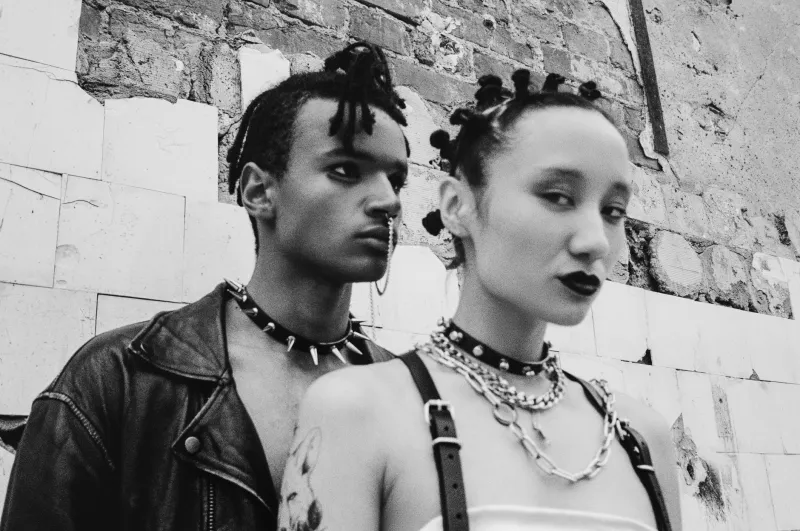
Somewhere right now, a brand strategist is in a meeting arguing that their client needs to feel "more authentic." The word authentic will be used seventeen times. Nobody in the room will define it. The campaign that results will target people who pride themselves on not responding to campaigns.
This meeting has been happening, in various forms, for roughly five thousand years.
The Cynics Had Merch
In the fourth century BC, a Greek philosopher named Diogenes of Sinope decided that Athenian society was hollow, status-obsessed, and fundamentally dishonest about what mattered. His response was to live in a ceramic jar, own essentially nothing, and publicly mock the pretensions of the wealthy and powerful. He told Alexander the Great to get out of his sunlight. He performed shameless acts in the public square to demonstrate that social norms were arbitrary.
He was, in the language of every era that came after him, extremely countercultural.
He also became famous. His followers, the Cynics, developed a recognizable aesthetic: rough cloak, walking staff, conspicuous rejection of comfort. Within a generation, being a Cynic had a look. You could identify one across a crowded agora. The rejection of performance had become a performance. The repudiation of status markers had become a status marker.
Diogenes probably would have found this hilarious. He also probably would have recognized it immediately, because the dynamic wasn't new even then.
The Playbook Is Older Than Writing
The structure of what we call counterculture follows a pattern so consistent across history that it starts to look less like social rebellion and more like a recurring institutional process.
Step one: a dominant culture develops visible markers of conformity — specific clothing, language, values, aesthetic preferences. Step two: a group forms in opposition, explicitly rejecting those markers and replacing them with inverted alternatives. Step three: the opposition develops its own markers, its own conformity, its own internal hierarchy. Step four: the mainstream absorbs the most commercially viable elements of the opposition aesthetic. Step five: the opposition either splinters into purer factions or gets fully incorporated, at which point a new opposition forms in reaction.
Repeat indefinitely.
You can run this pattern through 1st-century Roman Stoicism (a rejection of imperial excess that became fashionable among wealthy imperial Romans), 12th-century Christian reform movements (rejections of Church corruption that became new institutional churches), the English Romantic poets (rejections of industrial rationalism published by London's most sophisticated commercial publishers), American jazz (a Black musical form that expressed rejection of white cultural dominance and was promptly sold to white audiences as exotic authenticity), 1960s counterculture (a rejection of consumerism that generated one of the most commercially productive aesthetic revolutions in American history), punk (a rejection of corporate rock that signed to major labels within three years), and whatever is currently happening on TikTok.
The pattern doesn't care about the content of the rebellion. It operates on the form.
Why Gen Z's Authenticity Looks Exactly Like Everyone Else's
The current version of this is unusually self-aware, which makes it more interesting to watch, not less inevitable.
Gen Z's cultural rebellion is organized, in large part, around the concept of authenticity itself — rejecting the curated, filtered, aspirational performance of millennial social media culture in favor of rawness, irony, and visible imperfection. BeReal was built on this premise. The "de-influencing" trend was built on this premise. The whole aesthetic of posting your actual lunch instead of a styled flat-lay is built on this premise.
And brands figured out how to sell it within about eighteen months.
"Authentic" marketing is now a defined strategy with case studies and conference panels. Companies hire people specifically to make their content feel unfiltered. The rawness is produced. The imperfection is staged. The rejection of performance has become, with impressive speed, a performance.
This is not a failure of Gen Z's rebellion. It's the system working exactly as it always has. The people doing the absorbing are not cynical villains — they're just doing what every dominant culture has done when faced with an opposition aesthetic it can monetize. The Romans did it to the Stoics. The Church did it to the Franciscans. Columbia Records did it to Bob Dylan. The mechanism is not new.
What This Actually Tells Us About Power
Here's the part that gets uncomfortable: the absorption of rebellion is not primarily a story about capitalism's flexibility, though capitalism is very good at it. It's a story about how power reproduces itself through the management of opposition.
A counterculture that gets absorbed hasn't failed. It's been processed. The processing serves a function — it gives the dominant culture a periodic refresh, allows for genuine grievances to be acknowledged in aesthetic form without requiring structural change, and it gives each new generation the experience of rebellion without the cost.
This is why every generation feels like it invented authenticity. The experience of discovering that the mainstream is hollow and that there's a realer way to be is a genuine experience. It just turns out to be a recurring experience, not a unique one. The Cynics felt it. The Romantics felt it. The hippies felt it. The punks felt it. The feeling is real. The novelty is not.
The Only Move the History Books Respect
The historical record does contain examples of cultural opposition that didn't get absorbed — movements that produced actual structural change rather than aesthetic incorporation. They share certain features: they organized around material interests rather than aesthetic identity, they built institutions rather than vibes, and they were willing to be deeply, unfashionably boring about it.
The labor movement at its most effective wasn't cool. Abolitionism wasn't a lifestyle brand. The suffrage movement wore very sensible shoes.
The rebellions that get absorbed are almost always the ones that lead with aesthetics — with a look, a sound, a set of consumer choices that signal opposition. The ones that actually move the needle tend to be the ones that are too focused on specific, structural demands to develop a coherent aesthetic in the first place.
Which means, if history is any guide, the most genuinely countercultural thing any generation can do is also the least marketable: be boring, be specific, and be organized around something that can't be turned into a campaign.
Good luck getting that to trend.