Why Every Housing Boom Feels Like 'This Time Is Different' — And Why It Never Is
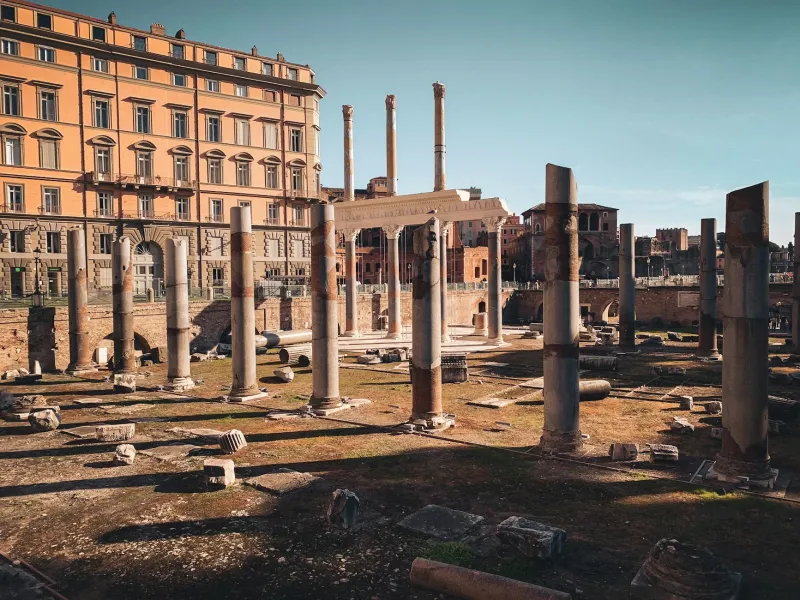
In 33 CE, Rome faced a credit crisis that would make 2008 look quaint. Property speculators had overleveraged themselves on apartment buildings called insulae, convinced that urban real estate was a one-way ticket to wealth. Sound familiar?
The Roman Property Machine
Roman investors didn't have mortgage-backed securities, but they had something functionally identical: a web of private loans secured against rental properties. Wealthy Romans would borrow money to buy insulae, then rent them out to cover the debt payments. When property values rose, they'd borrow against the increased equity to buy more buildings.
The psychology driving this boom was identical to what we saw in the early 2000s. Romans suffered from the same overconfidence bias that convinced American homeowners that house prices only go up. They displayed the same herd behavior, piling into property investments because everyone else was doing it. And just like in 2008, the elite captured policy-making, ensuring that regulations favored property speculation over stability.
When Reality Came Knocking
The Roman bubble burst when Emperor Tiberius enforced an old law requiring senators to keep two-thirds of their wealth in Italian land. Suddenly, overleveraged speculators needed cash fast. They dumped their insulae on the market, prices collapsed, and the credit system seized up.
The parallels to 2008 are eerie. In both cases, a regulatory change (Tiberius's enforcement, or the Federal Reserve's interest rate hikes) exposed the fragility of an overleveraged system. In both cases, the people who should have known better — Roman senators, American investment bankers — had convinced themselves that their sophisticated financial instruments had eliminated risk.
The Eternal Optimism of Property Investors
Here's what's fascinating from a psychological perspective: the cognitive biases that drove both bubbles are hardwired into human nature. We're pattern-seeking creatures who mistake recent trends for permanent realities. When property values rise for several years, our brains interpret this as evidence of a fundamental shift rather than a cyclical phenomenon.
Romans called this fortuna — the belief that good luck would continue indefinitely. Americans in 2007 called it "the new economy." Different words, same delusion.
Why Experts Always Miss the Bubble
Both Roman and American property experts suffered from what psychologists call confirmation bias. They sought out information that supported their bullish views while dismissing warning signs. Roman property investors ignored rising vacancy rates in outlying districts. American mortgage brokers ignored rising default rates among subprime borrowers.
In both cases, the experts had strong financial incentives to maintain optimism. Roman property developers made money on each new insula they built, regardless of long-term viability. American mortgage brokers made money on each loan they originated, regardless of the borrower's ability to repay.
The Elite Capture Problem
Perhaps the most striking parallel is how political elites in both eras became captured by property interests. Roman senators were heavily invested in real estate, making them reluctant to regulate speculation. American politicians received substantial campaign contributions from real estate and financial interests, creating similar conflicts.
This isn't corruption in the traditional sense — it's cognitive capture. When your wealth depends on rising property values, you genuinely believe that policies supporting property speculation are good for everyone. Your brain finds ways to rationalize self-interest as public interest.
The Autopsy Report Was Already Written
The Roman historian Tacitus documented exactly how property bubbles form and burst. He described the overconfidence, the herd behavior, the regulatory capture, and the inevitable crash. His account reads like a blueprint for 2008.
Yet every generation thinks its housing crisis is uniquely modern. We point to new financial instruments, new technologies, new economic conditions. But underneath the surface innovations, the psychological drivers remain constant.
Learning from Five Thousand Years of Data
This is why studying history matters. Modern behavioral economics has identified the cognitive biases that drive financial bubbles through laboratory experiments with college students. But history gives us the same insights through real-world case studies involving actual fortunes and actual consequences.
The Romans already ran the experiment. They documented the results. The question is whether we're smart enough to read their conclusions.
The Next Bubble Is Already Forming
Somewhere right now, investors are convincing themselves that "this time is different." Maybe it's cryptocurrency, maybe it's commercial real estate, maybe it's something we haven't thought of yet. The specific asset class doesn't matter — the psychology is always the same.
The Romans thought insulae were special because Rome was the eternal city. Americans thought housing was special because of demographic trends and financial innovation. The next generation will find their own reasons to believe in permanent prosperity.
But human psychology hasn't changed in five thousand years. The patterns are there for anyone willing to look. The Romans already wrote the manual — we just need to read it.