The Founders Built Democracy in a Sewer of Misinformation — On Purpose

Every few years, someone in a position of authority — a senator, a think-tank fellow, a tech CEO testifying before Congress — delivers some version of the same speech. Democracy, they explain gravely, depends on an informed citizenry. The current information environment threatens that foundation. The Founders could not have imagined a world where misinformation spreads this fast.
This speech is itself a form of misinformation. Not because the speaker is lying, necessarily, but because it requires a historical fantasy so complete that it borders on mythology. The Founders imagined exactly this world. They lived in a version of it. And they built the American democratic system not for some pristine marketplace of ideas that never existed, but for a messy, manipulated, propagandized information environment that they knew from personal experience.
What the Revolutionary Press Actually Looked Like
Let's be specific, because the details matter here.
In the 1770s and 1780s, American newspapers made no pretense of objectivity. They weren't trying to. A newspaper was openly affiliated with its patron — a political faction, a merchant interest, a particular ideological cause — and readers understood that. The Pennsylvania Gazette, the Boston Gazette, the Massachusetts Spy: these weren't neutral information services. They were instruments.
Benjamin Franklin, patron saint of American pragmatism, ran a printing business for decades and understood perfectly well that the press was a tool of persuasion. He used it as one. Samuel Adams, the revolutionary organizer, was essentially a professional propagandist — he planted stories, coordinated messaging across multiple outlets, and understood that emotional narratives spread faster than factual corrections. Sound familiar?
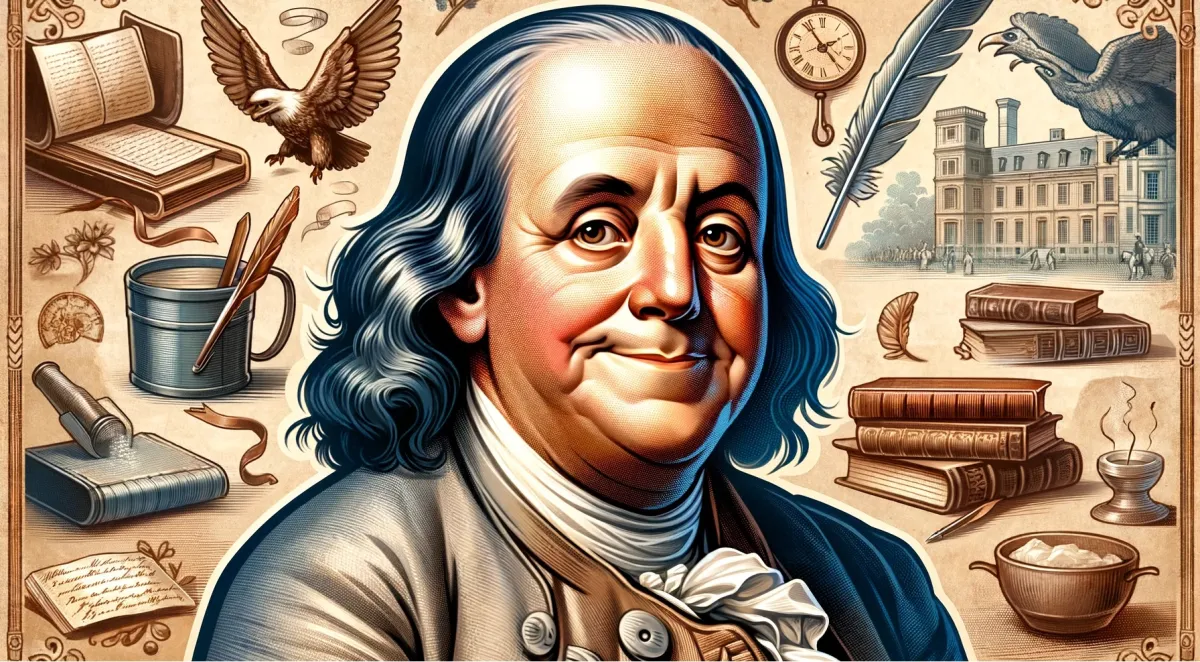 Photo: Benjamin Franklin, via www.otomasyonavm.com
Pamphlets were the social media of the era, and they operated by identical psychological logic: short, emotionally charged, designed to spread. Thomas Paine's Common Sense was a viral sensation. It was also, in places, factually aggressive — stretching evidence, simplifying complex situations, and appealing to outrage in ways that would get it labeled misinformation by any modern fact-checking standard.
And fabrications? Deliberate, knowing fabrications? Absolutely present. Stories about British atrocities were routinely exaggerated or invented. Loyalist positions were caricatured. The line between persuasion and deception was not a bright one, and most participants in the revolutionary media ecosystem weren't losing sleep over it.
The Alien and Sedition Acts: Year Nine
If you want a clean data point on how the Founders actually thought about information and democracy, look at what they did the moment they had power.
The Alien and Sedition Acts of 1798 — passed under John Adams, signed into law by a man who had literally helped write the Constitution — made it a crime to publish "false, scandalous, and malicious" writing against the government. Fourteen people were prosecuted. Matthew Lyon, a congressman from Vermont, was convicted and sent to prison for writing a letter criticizing Adams's administration. He won reelection from his jail cell.
Thomas Jefferson, who opposed the Acts furiously, responded by drafting the Kentucky Resolutions arguing that states could nullify federal law — a doctrine that would haunt American constitutional history for the next two centuries. His solution to misinformation was not to suppress it but to fight it with more speech, which sounds principled until you realize he was also quietly funding newspapers to attack Adams.
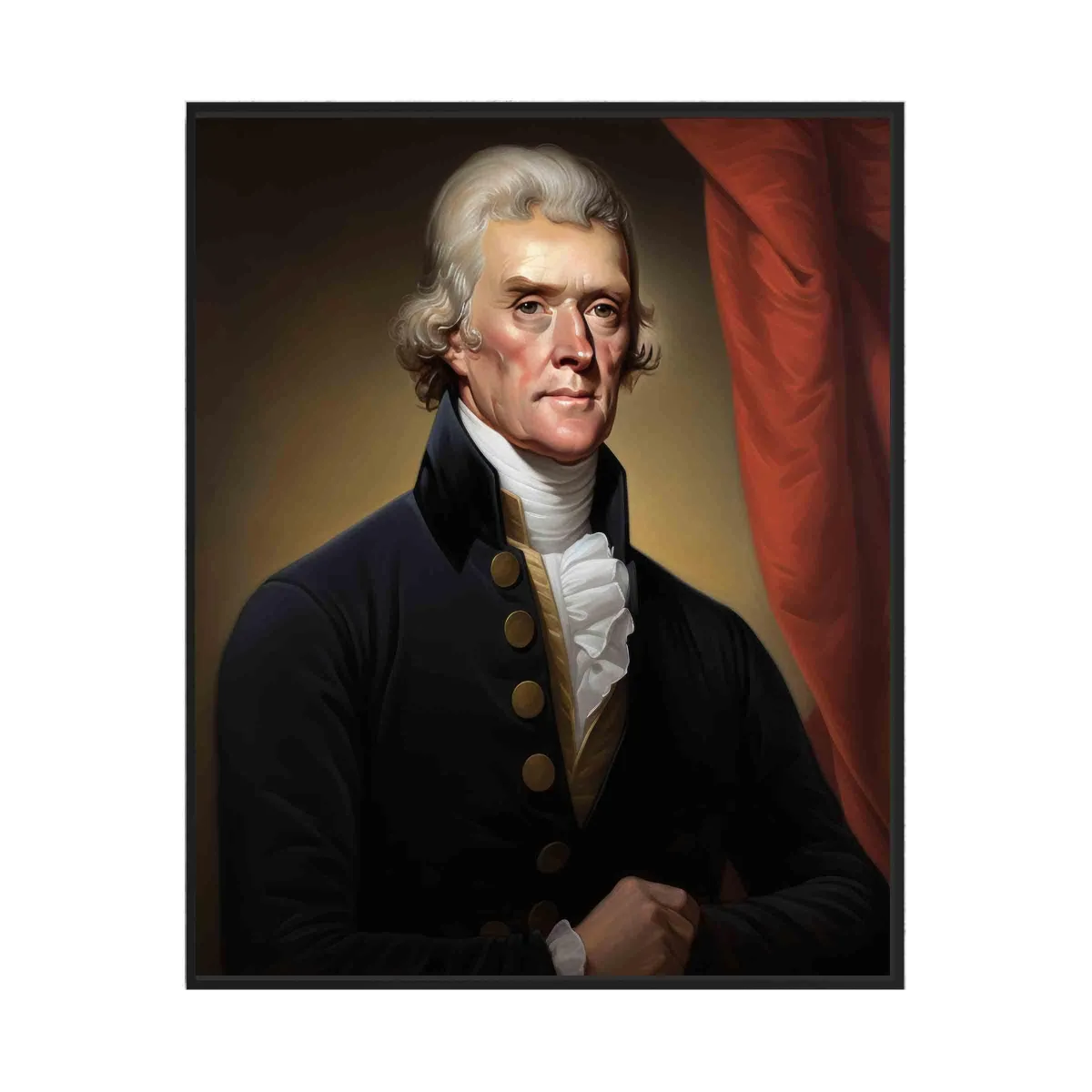 Photo: Thomas Jefferson, via m.media-amazon.com
The point isn't that the Founders were hypocrites, though some of them were. The point is that they were operating in a fully recognizable information environment — one with propaganda, partisan media, deliberate fabrications, and powerful actors trying to control the narrative — and they disagreed bitterly about what to do about it. That disagreement produced the First Amendment. It was not a theoretical document written for a hypothetical clean information ecosystem. It was a practical settlement between people who had just finished living through an information war.
Why the Brain Keeps Falling for It
Here's the piece that connects revolutionary-era pamphlets to your current social media feed, and it has nothing to do with technology.
Human cognition has a consistent and well-documented vulnerability: we evaluate information based on how it makes us feel and whether it confirms what we already believe, and we do this before we evaluate whether it's true. Psychologists call this motivated reasoning. It's not a bug introduced by the internet. It's a feature of how brains process information under conditions of social and political stress — which is to say, most of the time.
The revolutionary pamphlets worked because they were engineered, consciously or intuitively, around this vulnerability. They told colonists a story about themselves — virtuous, freedom-loving, oppressed by a distant tyranny — that felt emotionally true regardless of whether every specific claim in the pamphlet was accurate. The emotional truth made the factual details feel secondary. People shared the pamphlets because sharing them was a form of identity expression, not because they'd independently verified the content.
This is not a colonial-era phenomenon. It's the same mechanism that drives the sharing of outrage content on every digital platform that has ever existed. The technology changes the speed and scale. The psychology is identical.
What Democracy Was Actually Designed For
The useful historical insight here isn't depressing — or it doesn't have to be. It's clarifying.
American democracy was not designed for a population of perfectly rational, fully informed citizens making optimal choices based on accurate data. That population has never existed anywhere. The system was designed by people who had watched propaganda work, had used propaganda themselves, had seen deliberate fabrications shift public opinion, and had personally experienced the difficulty of separating truth from motivated fiction in a fast-moving information environment.
They built in checks and balances not because they trusted the information ecosystem but because they didn't trust it — or each other. The separation of powers, the Bill of Rights, the federal structure: these are not optimistic documents. They're defensive ones, designed by people who expected the information environment to be manipulated and wanted a system that could survive that.
Contemporary panic about misinformation tends to assume a fall from grace — a golden age of informed democratic discourse that the internet has corrupted. The historical record doesn't support that story. What it supports is something more useful: a recognition that democracy has always operated under conditions of information warfare, and that the question is never how to achieve a clean information environment (you can't) but how to build institutions robust enough to function in a dirty one.
The Founders didn't solve that problem. But they were at least honest with themselves about what they were dealing with. Five thousand years of data suggests that's the necessary starting point.