When Empires Stop Fixing Things, That's Not a Budget Problem — It's a Death Certificate
When Empires Stop Fixing Things, That's Not a Budget Problem — It's a Death Certificate
In 2021, the American Society of Civil Engineers gave the United States infrastructure a C-minus. Not a failing grade, technically. But the kind of grade that makes a parent sit down and have a serious conversation. The report estimated a ten-year funding gap of roughly $2.6 trillion — money needed just to keep existing systems from getting worse, not to build anything new.
This is usually covered as an engineering story, or a fiscal story, or a political story about congressional gridlock. It is all of those things. But it's also something the historical record has a very clear name for: the maintenance inflection point. And every major civilization that has hit it has found that what looked like a funding problem was actually a values problem, and what looked like a values problem was actually the beginning of the end.
Rome Built the Best Infrastructure the Ancient World Had Ever Seen — Then Stopped Caring About It
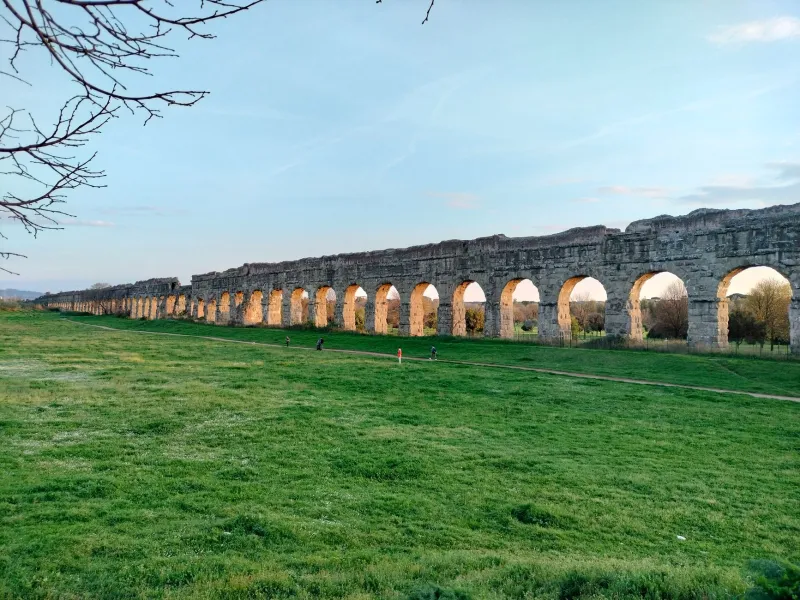
At its peak, the Roman water system was a genuine marvel. Eleven major aqueducts supplied the city of Rome with an estimated one million cubic meters of water per day — more per capita than many modern American cities receive. The engineering was sophisticated enough that portions of it functioned for centuries after the empire itself had collapsed.
But here's what the historical record shows about the later empire: maintenance spending dropped while monument spending didn't. The Aurelian Wall, built in the 270s AD, was a massive construction project. Diocletian's palace, completed around 305 AD, was enormous and expensive. The imperial baths kept getting bigger. Meanwhile, the aqueducts that made daily life in Rome possible were increasingly patched with inferior materials, managed by a shrinking corps of specialists, and in some cases simply allowed to degrade.
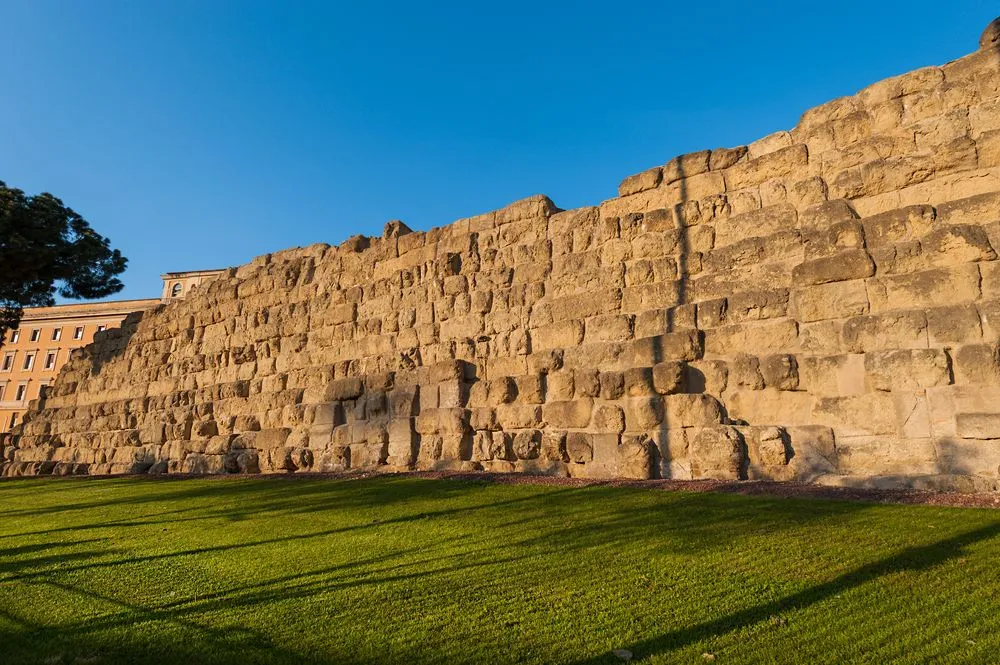 Photo: Aurelian Wall, via static1.thetravelimages.com
This wasn't ignorance. Roman engineers knew perfectly well how to maintain aqueducts. The knowledge hadn't disappeared. What had disappeared was the institutional will to prioritize the unglamorous work of keeping existing systems functional over the politically visible work of building new things with the emperor's name on them.
Procopius, writing in the sixth century, documented aqueducts that had fallen into disrepair under the late empire. His tone is one of bafflement — these were not mysterious technical failures. They were failures of attention and priority.
The Psychology of Maintenance Aversion
This is where human psychology becomes relevant, because the Roman pattern isn't a quirk of Roman politics. It's a consistent feature of how humans — individually and institutionally — relate to maintenance versus construction.
Behavioral economists have documented what they call 'new purchase bias' — the cognitive tendency to value acquiring new things over maintaining existing ones, even when the maintenance provides objectively better returns. New things are visible, attributable, and emotionally satisfying in ways that maintenance isn't. You can put your name on a new building. You can't put your name on a pipe that didn't burst.
This bias operates at every scale, from the homeowner who remodels the kitchen while ignoring the roof to the government that builds a new highway while the bridges on the existing one develop stress fractures. The psychology is identical. The stakes just vary.
For empires, the stakes are existential, and the historical record is unambiguous about the direction of causation: physical infrastructure decline and political institutional decline are not parallel problems that happen to occur simultaneously. They are the same problem, expressed in different materials.
Britain Ran the Same Play a Thousand Years Later
The British rail network in its Victorian heyday was the most advanced transportation system in the world. By the mid-twentieth century, it was a punchline. The Beeching cuts of the 1960s — which closed roughly a third of Britain's rail network on efficiency grounds — are usually told as a story about modernization and rational resource allocation. They were actually something more familiar: a powerful institution deciding that the expensive, invisible work of maintaining distributed infrastructure was less important than concentrating resources on the routes that looked profitable on a spreadsheet.
The communities that lost rail connections didn't disappear. They just became less connected, less economically dynamic, and increasingly resentful of a central government that seemed to regard their physical isolation as someone else's problem. The political geography of Brexit — which strongly tracked with the communities that had lost the most infrastructure investment over the previous fifty years — suggests that the Beeching cuts were not purely an engineering decision. They were a political one, and the bill came due about sixty years later.
This is the part that infrastructure-as-engineering-story always misses: the communities served by infrastructure are not passive recipients of technical services. They are people whose sense of being included in the national project is partly expressed through whether the national project bothers to maintain the roads and rails and water systems they depend on. When maintenance stops, the message received is not 'we have a budget problem.' The message received is 'you are not the priority.'
The Monument Trap
Every civilization that has fallen into maintenance aversion has done so partly because monuments are a better political product than maintenance. A new stadium, a new highway, a new federal building — these are ribbon-cutting events. They generate photographs. They create the impression of dynamism and investment.
Replacing corroded water mains under a city street generates a traffic jam and a bill. The political math is not complicated.
But the historical math is. The Roman emperors who kept building monuments while the aqueducts degraded were not stupid. They were responding rationally to the incentive structures of their political moment. The problem is that political incentive structures and civilizational health incentive structures are not the same thing, and when they diverge far enough for long enough, the civilization eventually loses.
America's infrastructure gap is not primarily a story about insufficient technology or engineering capacity. The US has both in abundance. It's a story about what gets prioritized when resources are constrained — and the consistent historical answer to that question is: the thing that generates the most visible political return, which is rarely the thing that keeps the existing systems running.
What the Data Actually Says
Five thousand years of civilizational history produce a reasonably consistent finding: the moment a powerful state begins treating maintenance as a discretionary expense and monument-building as essential, the clock has started. It doesn't run at the same speed in every case. Rome took centuries to fully collapse after the maintenance inflection point. Some empires moved faster.
But the direction of travel is consistent, and the mechanism is not mysterious. Infrastructure is trust made physical. When a government maintains the systems that daily life depends on, it is demonstrating — in concrete and steel and water pipe — that the people depending on those systems are worth the unglamorous, expensive, politically unrewarding work of keeping things functional.
When it stops, it isn't just the pipes that start to fail.
The C-minus is not a grade for engineering. It's a grade for priorities. And historically, that particular grade doesn't improve on its own.