It Only Took Humanity 600 Years to Buy Movable Type. Your Office Needs Three More Quarters.
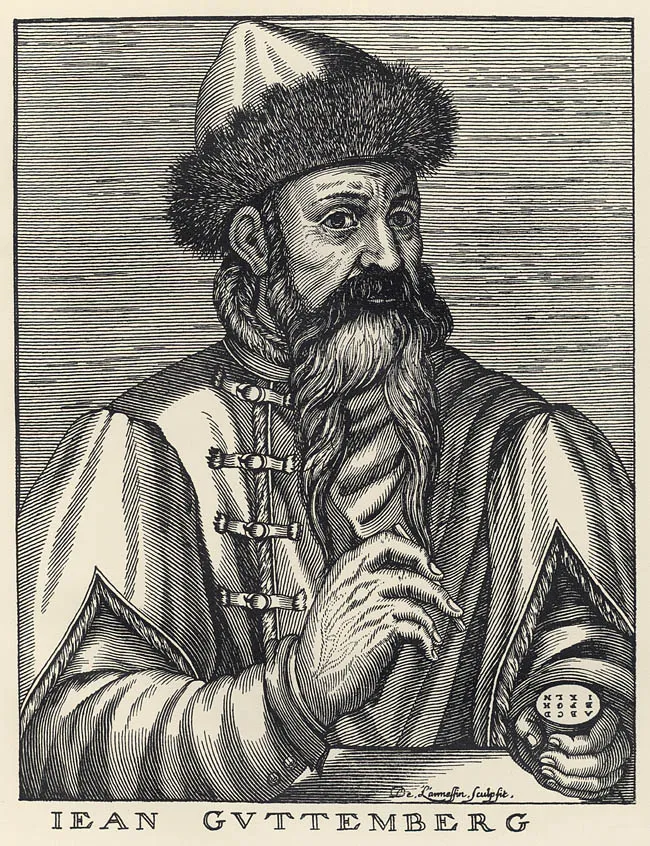
Photo: Thevet, André (illustrator), De Larmessin (graveur/engraver), Public domain, via Wikimedia Commons
Every office has that one meeting. The one where someone proposes a new tool or a new way of working, and the room responds with a combination of 'too expensive,' 'people will abuse it,' and 'that's not how we do things here.'
Here's what should chill you: those exact three sentences have killed good ideas for over a thousand years. We have the receipts.
The Printing Press Sat Around for Decades
Movable type existed in Korea by the 13th century and hit Europe with Gutenberg around 1450. And yet printing didn't transform most of European commerce and government for the better part of a century. Why? Scribes had jobs. Monasteries controlled manuscript production. The excuse, in period terms: this is too expensive, it disrupts how we do things, and if everyone can read, who knows what they'll get up to.
All three objections were, in a narrow sense, correct. All three were also beside the point. The press won anyway — it just won slowly, and the people who delayed adopting it didn't get remembered fondly. They got remembered as the footnote.
Doctors Ignored Hand-Washing for a Generation
In the 1840s, Ignaz Semmelweis noticed that doctors who washed their hands delivered babies with dramatically lower mortality rates. His reward was professional exile. The objection wasn't that he was wrong — it was that the implication was insulting. Gentlemen doctors were not carrying death on their hands, thank you very much.
'Workers will resent the implication' is the same excuse your IT department hears when security training is proposed. The technology isn't the hard part. The ego is.
Stirrups, Bookkeeping, and Other Embarrassing Delays
The stirrup showed up in Asia centuries before Europe adopted it, and European cavalry resisted it long after it was obviously decisive. Double-entry bookkeeping — arguably the technology that made modern capitalism possible — was described in 1494 and took centuries to become standard practice among merchants who could have used it immediately.
The pattern in every case: the innovation wasn't rejected on the merits. It was rejected because adopting it meant admitting the old way was wrong, and the people running the old way were the ones holding the meeting.
Your Conference Room Is a Historical Reenactment
Now map it forward:
- AI tools: 'Too expensive, and people will use it to cheat.' That's the printing press argument with better graphics.
- Four-day workweeks: 'It's not how we do things, and workers will slack.' That's the Semmelweis argument — the objection is to what the change implies about the old system, not the change itself.
- Remote work: 'It breaks our culture.' Every technology from the stirrup to the spreadsheet 'broke the culture' of whoever was benefiting from the previous arrangement.
The excuses never change because the psychology never changes. Adoption isn't an information problem. Nobody in your office lacks the data. They lack the willingness to absorb a loss — of status, of investment, of identity — that comes with admitting the old way is obsolete.
The Actual Lesson
History doesn't tell you which technologies to adopt. It tells you to distrust the reasons you give for not adopting them. 'Too expensive' usually means 'the cost falls on me and the benefit falls on someone else.' 'People will abuse it' usually means 'the current system privileges people I like.' 'That's not how we do things' is not an argument. It's a tombstone inscription for organizations.
Five thousand years of data, one consistent finding: the excuses are always the same, and they're always wrong in the same way. The only variable is how long you wait before you stop making them.