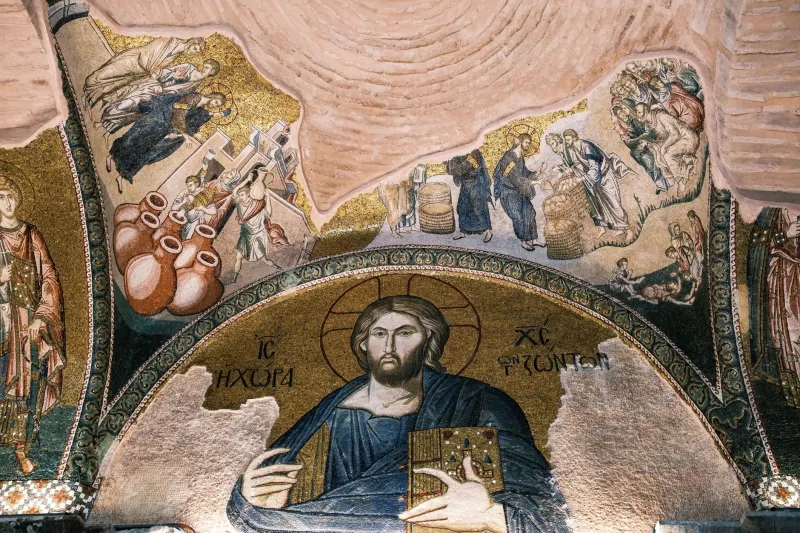
The Byzantine Empire Spent 120 Years Fighting About Art. Sound Familiar?

Photo by Photo by LUCIANO BESERRA on Unsplash on Unsplash
In 726 AD, the Byzantine Emperor Leo III ordered the removal of a prominent icon of Christ from the Chalke Gate — the ceremonial entrance to the imperial palace in Constantinople. The crowd that had gathered to watch rioted. A soldier sent to carry out the order was killed. The controversy this sparked would consume the empire, on and off, for the next 120 years, cost multiple emperors their thrones, produce schisms with Rome, and result in the destruction of an enormous amount of religious art.
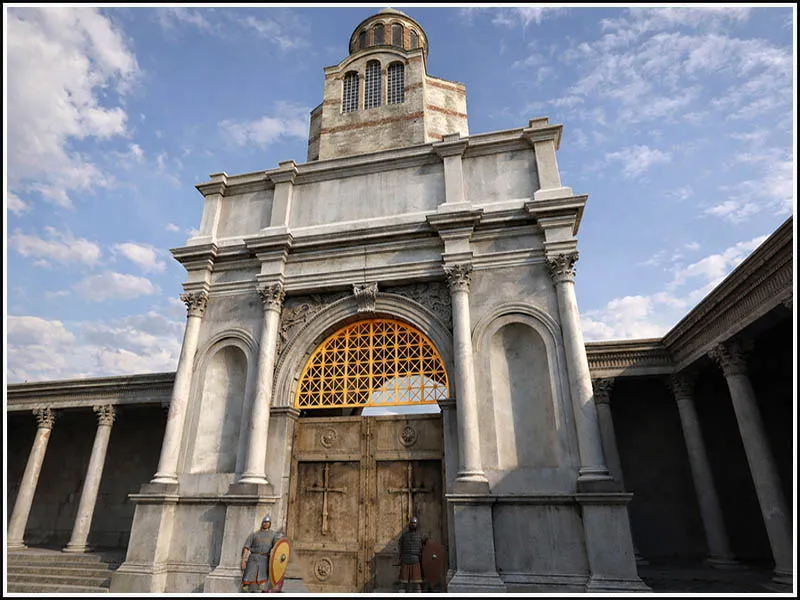 Photo: Chalke Gate, via www.byzantium1200.com
Almost none of it was actually about the art.
That's the thing about culture wars that the historical record makes clear and that living through them tends to obscure. The stated subject of the conflict — in Byzantium, whether depicting holy figures in images was sacred devotion or sinful idolatry — is real enough as a values disagreement. People genuinely held these views. But the reason the conflict consumed an empire for over a century, the reason it kept reigniting every time it seemed to be resolved, had almost nothing to do with theology and almost everything to do with who had money, who had power, and who was using the argument to get more of both.
If that sounds like the last decade of American political life, that's not a coincidence. It's a pattern.
What Iconoclasm Was Actually About
The Byzantine Empire in the 8th century was under serious military pressure — from Arab expansion to the south and east, from Bulgars to the north. The empire needed money and it needed a way to consolidate central authority against the sprawling, semi-autonomous power of the monasteries.
The monasteries were, by this point, enormously wealthy. They owned land, they controlled significant labor, and they were major producers and distributors of religious icons — which were big business. Pilgrims paid for icons. Donors commissioned them. The icon trade was a significant revenue stream for monastic institutions that the imperial government couldn't easily tax.
When Leo III declared icons idolatrous and ordered their removal, he was doing something that had genuine theological backing — there was a real tradition of concern about image veneration in Christian thought. But he was also striking at the economic power of the monasteries and asserting imperial authority over an institution that had accumulated significant autonomy.
The people who most enthusiastically supported Iconoclasm tended to be: the imperial military (who drew on frontier populations skeptical of elaborate icon veneration), administrators who resented monastic economic power, and emperors who wanted fewer competing power centers. The people who most fiercely opposed it tended to be: the monasteries themselves, the urban populations of Constantinople who had deep devotional attachments to specific icons, and the Pope in Rome, who had his own reasons for wanting to limit Byzantine imperial authority.
The theological argument was real. The economic and political argument was realer.
The Structure of Every Culture War
Here's what makes Iconoclasm useful as a case study rather than just an interesting historical footnote: the structure of the conflict maps almost exactly onto what researchers who study contemporary culture wars have identified as the standard architecture of these disputes.
Step one: identify a genuine values disagreement. Iconoclasm had one. The question of whether venerating images was appropriate Christian practice was a real theological question with real stakes for how people understood their faith.
Step two: attach that values disagreement to existing economic and regional grievances. The iconoclast position mapped neatly onto frontier military culture and resentment of monastic wealth. The iconophile position mapped onto urban devotional culture and monastic economic interest.
Step three: watch elites on both sides use the values conflict to build coalitions that would have been harder to assemble on purely economic grounds. It's much easier to mobilize a farmer to fight for the honor of Christ's image than to fight for the abbot's tax exemption — even if the abbot's tax exemption is what's actually at stake.
Step four: the conflict becomes self-sustaining because the symbolic stakes feel existential to ordinary participants even as the material stakes are being managed by elites.
Run that same sequence through Confederate monument debates, curriculum fights over what gets taught in public schools, arguments about which movies deserve to be made, or the ongoing battle over what language is acceptable in which contexts, and the structure is recognizable. The specific symbols change. The machinery does not.
Why the Conflict Never Resolves
Byzantine Iconoclasm went through multiple cycles of resolution and reignition across 120 years. Icons would be banned, then restored, then banned again. Emperors who reversed their predecessor's position would find the conflict reigniting from the other direction. The Second Council of Nicaea in 787 officially restored icon veneration — and then Iconoclasm came back anyway under subsequent emperors until it was finally settled in 843.
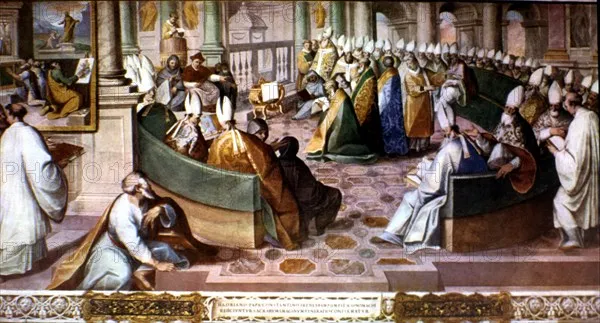 Photo: Second Council of Nicaea, via www.photo12.com
This pattern of apparent resolution followed by renewed conflict is also characteristic of modern culture wars, and the Byzantine case suggests why: when a values conflict is doing proxy work for unresolved material and political grievances, settling the symbolic question doesn't settle the underlying tension. The monasteries' economic power didn't disappear when icons were restored. The frontier military culture didn't stop existing. The imperial government's desire to consolidate authority didn't go away. So the conflict kept finding new ignition points.
American culture wars show the same pattern. The specific flashpoints cycle — school prayer, flag burning, gay marriage, transgender athletes, critical race theory, whatever comes next — but the underlying tensions they're processing (regional identity, economic displacement, anxiety about cultural change, resentment of institutional elites) persist regardless of how any individual battle resolves.
What History Is Actually Telling Us
The Clio Method's whole premise is that human psychology hasn't changed, and nowhere is that more visible than in the architecture of culture wars. The Byzantine Empire didn't have cable news, social media, or think tanks producing position papers. It had court theologians, monastery networks, and popular preachers. The amplification mechanisms were different. The psychological dynamics — tribal identity, elite manipulation of genuine grievance, the way symbolic conflict makes material interests invisible — were identical.
This doesn't mean the values disagreements at the center of culture wars are fake. The Byzantines who believed icons were sacred weren't pretending. The Americans who hold strong views about what should be taught in schools or whose history gets commemorated in public spaces aren't pretending either. Genuine values conflicts are real and worth taking seriously.
But the historical record is pretty clear that genuine values conflicts, left to people who actually hold them, tend to produce negotiated accommodations over time. What prevents accommodation — what turns a values disagreement into a 120-year civilizational conflict — is usually the discovery by elites that the conflict is more useful unresolved.
The Byzantine Empire eventually settled Iconoclasm. It took long enough that the conflict had materially weakened imperial institutions in ways that contributed to the empire's long decline. The Empress Theodora who finally ended it in 843 is celebrated in Eastern Orthodox tradition as a saint.
History does eventually move on. It just tends to leave a lot of damage behind while it's deciding to.