The Founders Read the Obituaries of Dead Republics — and Built Their Fears Into the Blueprint

Here's something that gets lost in the mythology: the Founding Fathers were not confident men. They were, by the historical record, deeply anxious ones. They had spent years reading about every republic that had ever existed, cataloging the specific ways each one had come apart, and they were acutely aware that they were attempting something with a very poor track record.
John Adams put it plainly in a 1814 letter: 'Democracy never lasts long. It soon wastes, exhausts, and murders itself. There never was a democracy yet that did not commit suicide.' This wasn't cynicism. It was a man reporting what the data showed.
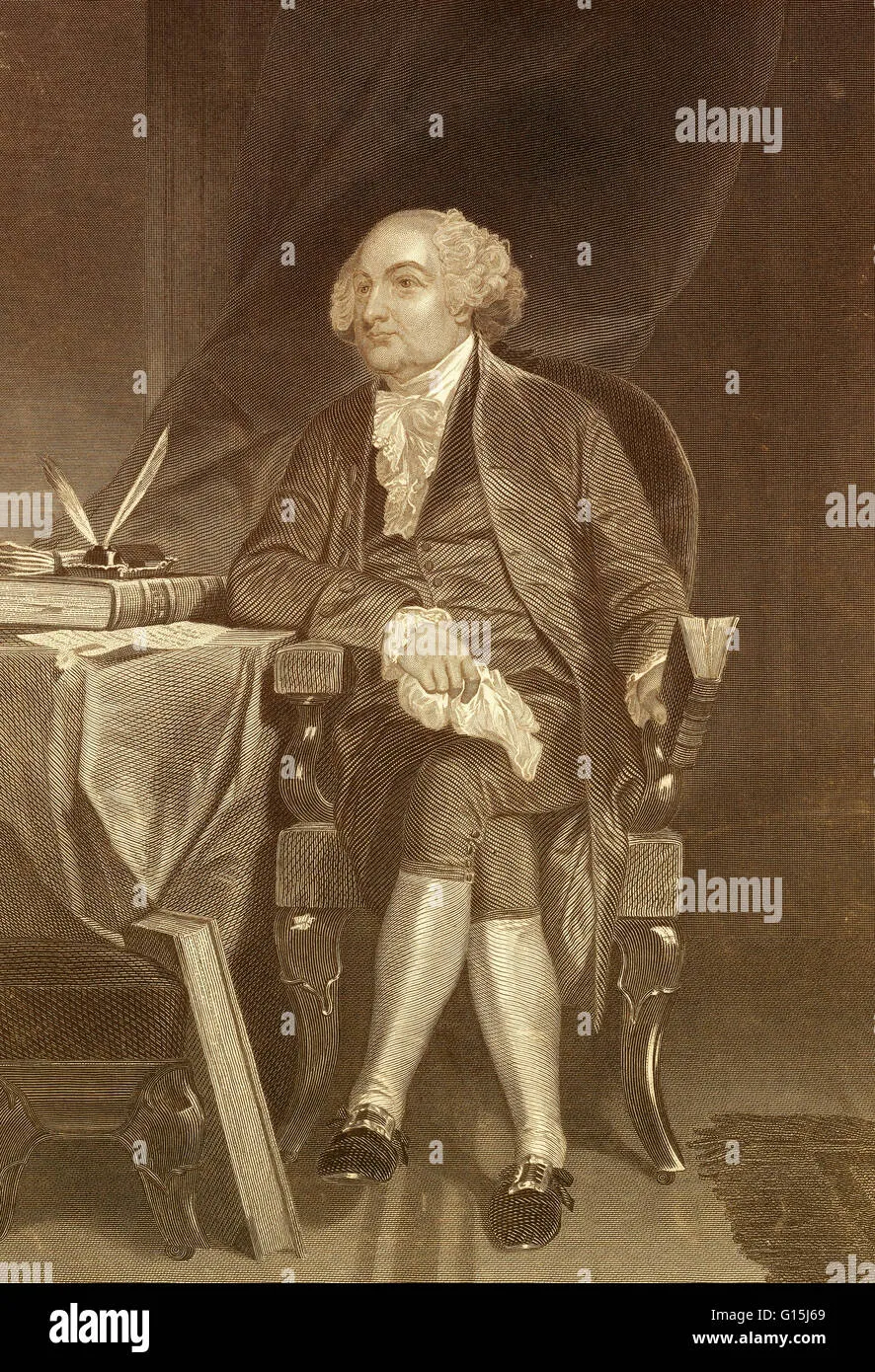 Photo: John Adams, via c8.alamy.com
The question worth asking now — without the partisan filter that usually gets slapped over this material — is: what specifically did they fear? And how close is the present moment to the scenarios they were trying to prevent?
Their Source Material Was Mostly Roman
To understand what the founders feared, you have to understand what they were reading. The curriculum of an educated American in the 1770s and 1780s was saturated with classical history. Polybius, Cicero, Livy, Plutarch — these weren't footnotes. They were the primary texts through which educated colonists understood politics.
And what those texts described, over and over, was the same basic story: a republic built on civic virtue and institutional balance gradually hollowed out by factionalism, demagoguery, and the concentration of power in individuals who were popular enough to override the system's safeguards.
Madison's notes from the Constitutional Convention show a man who had essentially memorized this failure pattern. His Federalist No. 10 is, among other things, a clinical diagnosis of how factions destroy republics — drawn almost directly from what he'd observed in Greek city-states and the late Roman Republic. He wasn't theorizing. He was pattern-matching.
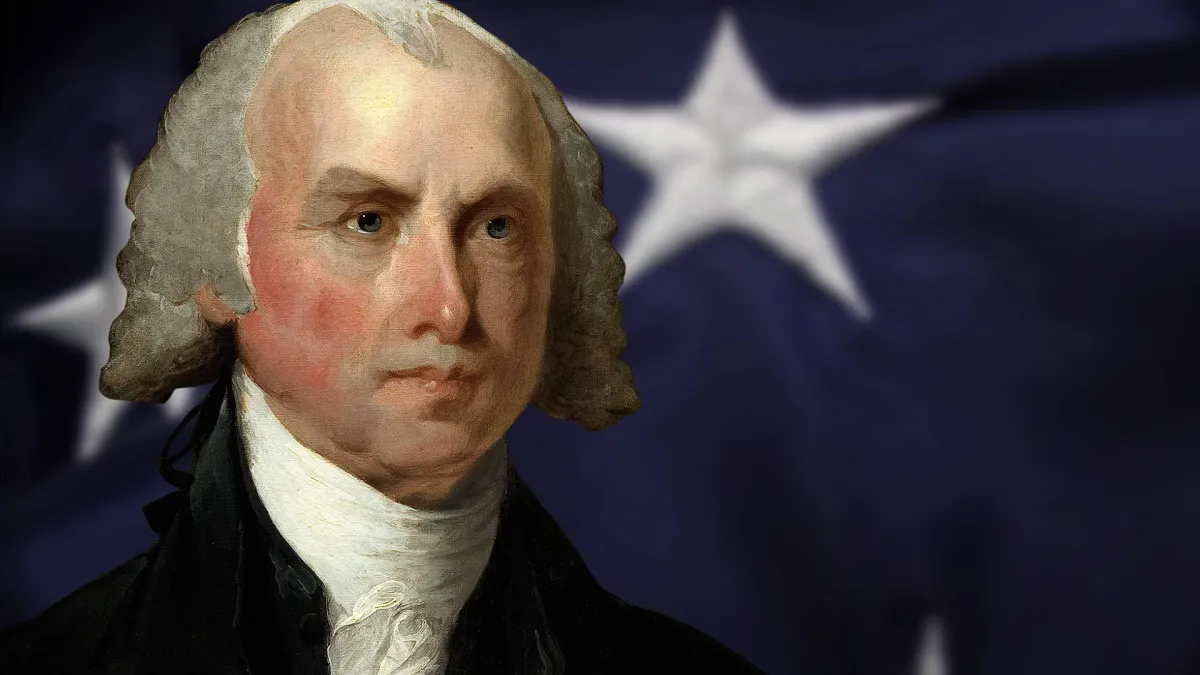 Photo: James Madison, via wallpapers.com
The Three Specific Fears
If you read the private correspondence — not the formal documents, but the actual letters — three anxieties appear repeatedly.
The first was faction. Madison's word for what we'd now call tribalism or polarization. He defined it as a group of citizens 'united and actuated by some common impulse of passion, or of interest, adverse to the rights of other citizens, or to the permanent and aggregate interests of the community.' He thought faction was basically unavoidable in a free society — human nature guarantees it — but he believed it could be managed through institutional design. The size and diversity of the American republic, he argued, would prevent any single faction from dominating permanently.
What he didn't fully account for was the possibility that two factions could become so dominant that they effectively became the whole system, and then compete to dismantle the institutional guardrails that had constrained them.
The second fear was demagogy. This one kept Hamilton up at night. His contributions to the Federalist Papers return repeatedly to the danger of charismatic leaders who bypass deliberative institutions by appealing directly to popular passion. He'd watched it happen in ancient Athens. He'd read about it in Rome. Caesar didn't overthrow the Republic by staging a coup in the dark — he did it in broad daylight, with enormous popular support, because the institutions that should have checked him had already been weakened by decades of factional warfare.
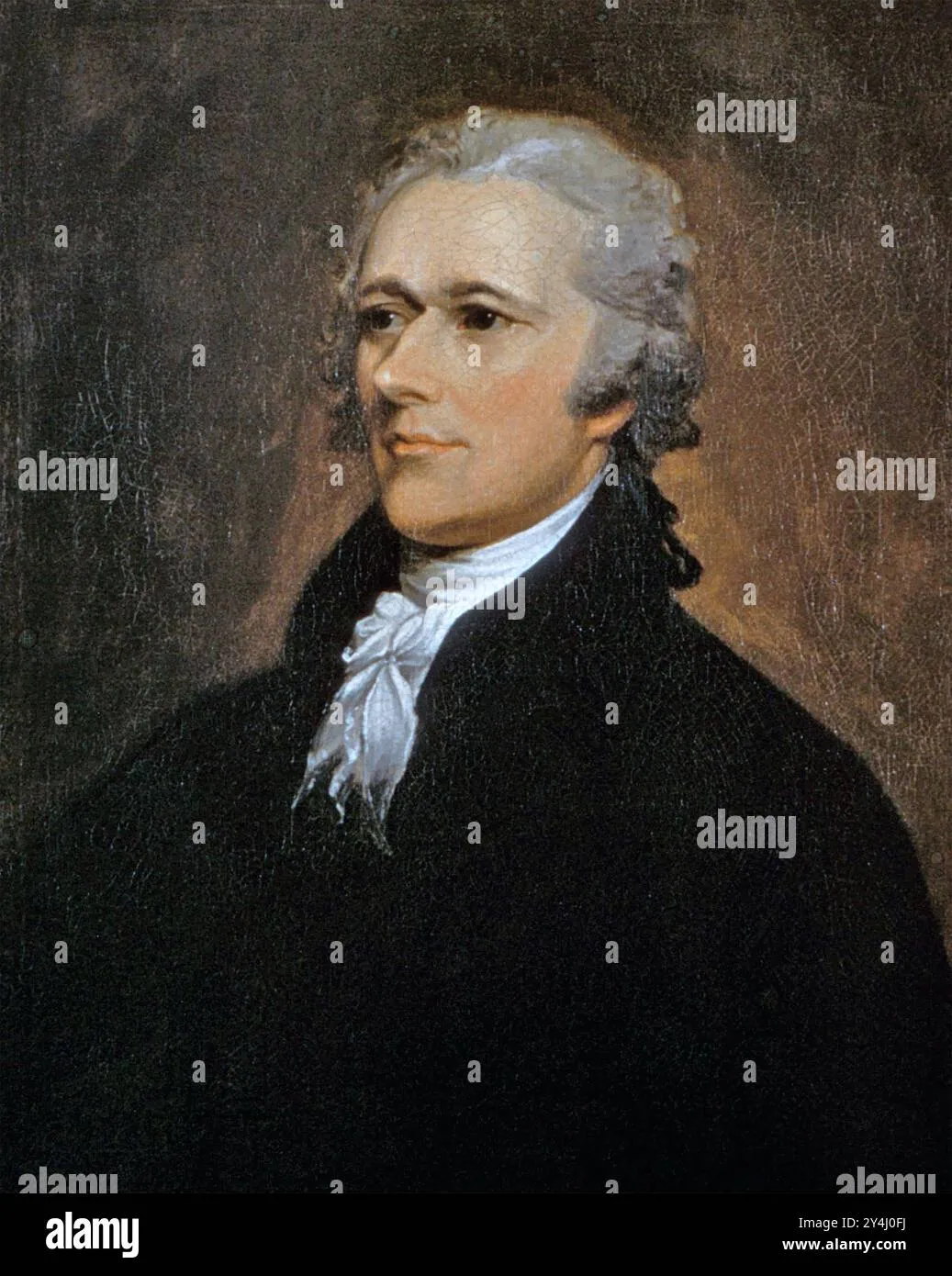 Photo: Alexander Hamilton, via c8.alamy.com
Hamilton wrote in Federalist No. 68 that the Electoral College was specifically designed as a check against 'the desire in foreign powers to gain an improper ascendant in our councils' and against 'the little arts of popularity' — by which he meant the ability of a sufficiently charismatic figure to win a popularity contest while lacking the qualities actually needed to govern.
The third fear was institutional erosion. Adams, in particular, was preoccupied with this one. He believed that the Constitution's checks and balances only worked as long as the people operating them genuinely believed in the legitimacy of the system. If enough powerful actors decided the rules applied to their opponents but not to themselves, the rules would stop functioning — not through a dramatic single moment of repeal, but through a slow accumulation of exceptions, workarounds, and precedents that gradually drained the institutions of their actual force.
'Our Constitution was made only for a moral and religious people,' he wrote in 1798. The 'moral' part of that is often misread as being about personal virtue. He was talking about civic virtue — the willingness to constrain your own faction's behavior by the same rules you'd apply to your opponents.
What They Got Wrong
They weren't prophets. They got some things significantly wrong, and honesty requires acknowledging that.
They substantially underestimated how durable slavery would make the faction problem. The compromise they built into the Constitution to hold the founding coalition together created a fault line that eventually required the deadliest war in American history to partially resolve — and the resolution was partial enough that the aftershocks are still visible.
They also underestimated media. The partisan press of the 1790s surprised them — Hamilton and Madison, who had collaborated on the Federalist Papers, became bitter enemies partly through a newspaper war. The information environment they assumed — slow, expensive, requiring some institutional infrastructure to produce — was already being disrupted within their lifetimes. The idea of an information ecosystem that could reward outrage at industrial scale would have broken their models entirely.
The Part That Should Make You Uncomfortable
Here's what the historical record actually shows: the founders built a system designed to slow the failure modes they'd identified. They did not build a system designed to stop them permanently. They were too honest about human psychology for that kind of optimism.
Madison explicitly wrote that no paper constitution could survive if the population and its leaders stopped wanting it to. The parchment was a coordination mechanism, not a force field. It worked when the people operating it treated it as binding. It became a prop when they didn't.
Every republic in their reading list had a moment — usually visible in retrospect, rarely recognized in real time — when the institutions were still standing but had stopped functioning as intended. Rome had a Senate for centuries after it had effectively become a rubber stamp. The forms persisted. The substance had left.
They couldn't say this loudly, because saying it too explicitly would have been read as defeatism or as a partisan attack. So they embedded the warning in the architecture instead, and hoped future generations would read the blueprints carefully.
Five thousand years of data on how republics behave suggests this: the warning signs they identified are not hypothetical. They're a checklist. And checklists are most useful before you need them, not after.