Your Company's Promotion Process Is a Thousand-Year-Old Chinese Exam in a Polo Shirt
Your Company's Promotion Process Is a Thousand-Year-Old Chinese Exam in a Polo Shirt
Somewhere right now, a mid-level manager is filling out a competency framework for someone who deserves a promotion. They're rating that person on 'executive presence,' 'strategic thinking,' and 'cultural alignment.' They believe, sincerely, that they are being objective. They are not. They are running a piece of software that a Tang Dynasty emperor debugged around 650 CE, and it has the same bug it always had.
The bug is this: systems designed to find the best person almost always end up reproducing whoever designed the system.
The Exam That Convinced an Empire It Was Fair
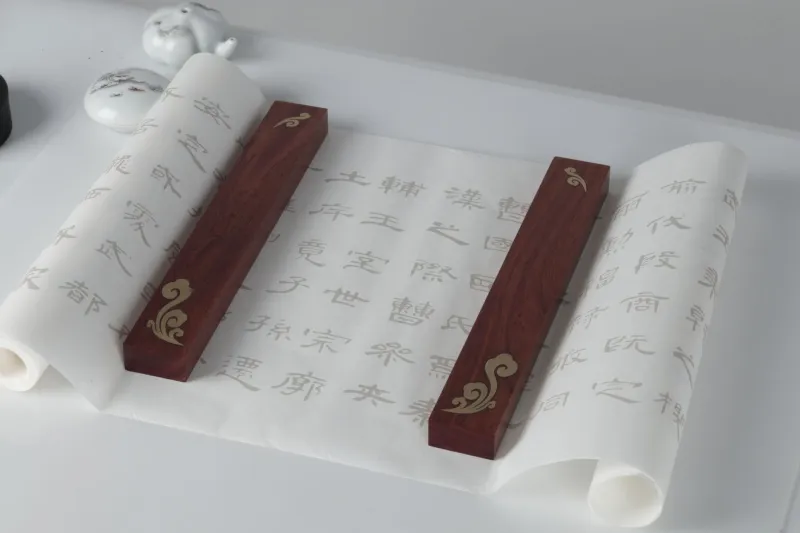
The Chinese imperial examination system — the keju — is one of history's genuinely impressive inventions. For over a thousand years, it was the primary mechanism for staffing the most sophisticated bureaucracy the world had ever seen. In theory, any man (and it was always men) regardless of birth could study the Confucian classics, pass a brutal multi-stage exam, and earn a position in the imperial government. No family connections required. No bribes necessary. Pure merit.
The Tang and Song dynasties expanded it aggressively. The Ming and Qing dynasties refined it into an almost algorithmic process. At its peak, the system involved years of preparation, multiple elimination rounds, and a final examination conducted in individual wooden cells where candidates wrote for days straight. The pass rate in some periods hovered below one percent.
This was, by the standards of the 12th century, astonishingly egalitarian. It replaced hereditary aristocracy with something that at least looked like open competition. European visitors centuries later were genuinely impressed. Voltaire praised it. Enlightenment thinkers pointed to it as evidence that rational governance was possible.
But here's what the admirers glossed over: the exam tested exactly one thing — mastery of the Confucian canon as interpreted by the state. Not problem-solving. Not creativity. Not administrative judgment. The ability to reproduce, in elegant classical prose, ideas that the ruling class had already decided were correct.
What 'Merit' Actually Meant
The practical effect was predictable in hindsight. Wealthy families could afford tutors and study materials. Candidates from regions where classical education was well-established dramatically outperformed candidates from peripheral areas. The examination content itself was frozen — innovations in thought, heterodox interpretations, practical knowledge of engineering or agriculture or medicine were irrelevant and sometimes actively penalized.
The historian Benjamin Elman spent decades studying the keju and found that while it did allow some genuine social mobility, the system overwhelmingly rewarded families who had already been producing officials for generations. They knew the format. They knew the approved interpretations. They knew, in the most literal sense, how to give the right answer.
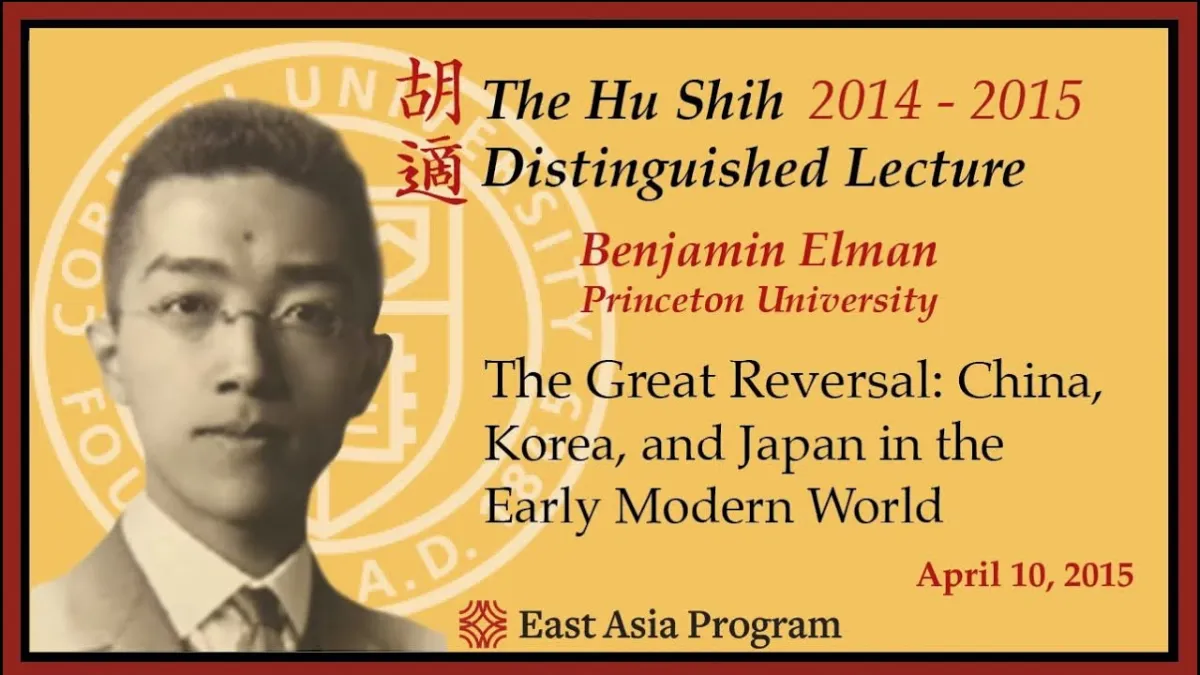 Photo: Benjamin Elman, via i.ytimg.com
The exam didn't select for the best governors. It selected for the best test-takers — specifically, test-takers who had deeply internalized the values and perspectives of the existing governing class. Which meant the governing class kept producing versions of itself and calling it a meritocracy.
Sound familiar?
Stack Ranking Is Just the Keju With a Spreadsheet
When GE popularized stack ranking in the 1980s — the practice of grading employees on a forced curve and cutting the bottom performers annually — Jack Welch presented it as ruthless objectivity. No sentiment. No politics. Just performance data.
 Photo: Jack Welch, via nypost.com
Except the performance data was collected by managers rating subordinates on criteria those managers had defined, using their own judgment about what 'performance' looked like, in a corporate culture that had very specific ideas about what a high performer sounded like in a meeting, dressed like in a client presentation, and prioritized outside of work hours.
The research on modern promotion processes is not flattering. Studies consistently find that 'executive presence' — one of the most common competency framework criteria — is evaluated differently based on race, gender, and accent. 'Cultural fit,' another staple, is essentially a measurement of how comfortable existing leadership feels around a candidate. '360-degree feedback' reflects the social dynamics of the office as much as it reflects actual work quality.
None of this is necessarily malicious. The managers running these processes usually believe they're being fair. The keju examiners believed they were being fair too. The system was designed to feel objective. That's what makes it effective.
The Feature, Not the Bug
Here's the uncomfortable part: from the perspective of the people running these systems, this isn't a failure. It's working as intended.
The Tang emperor wasn't trying to find the most creative, disruptive thinkers in China. He was trying to staff a bureaucracy that would maintain stability and execute imperial policy consistently across a territory the size of a continent. For that purpose, selecting people who had deeply internalized orthodox values was genuinely functional. Conformity was the point.
Modern corporations are not entirely different. A company that promotes people who challenge every assumption and ignore cultural norms would be chaotic. Some degree of value alignment is genuinely useful. The problem isn't that organizations want employees who fit — it's that 'fit' is doing a lot of unexamined work, and the people defining it are almost never aware of how much their own background is baked into the definition.
The keju lasted over a millennium partly because it worked well enough and partly because the people it benefited were the people with the power to reform it. That's also a familiar dynamic.
What the Historical Record Actually Tells Us
Human psychology hasn't changed. The impulse to design a selection process and then call it objective is as old as organized institutions. Every generation believes it has finally cracked the meritocracy problem — the Confucian exam, the civil service reform movement of the 19th century, psychometric testing in the 20th, algorithmic hiring tools today.
Each iteration genuinely improves on the last in some ways. Each iteration also finds new ways to embed the preferences of whoever designed it. The AI hiring tools currently being scrutinized by the EEOC are, in this sense, a direct descendant of the wooden examination cells of the Ming Dynasty. Different technology. Same cognitive architecture underneath.
The keju was finally abolished in 1905, after critics spent decades arguing that it was producing officials who could write beautiful classical essays and govern terribly. The reformers were right. They replaced it with a modern education system that had its own embedded assumptions about what competence looked like.
Your company's next performance cycle opens in Q4. The rubric is already written. Somebody wrote it who looked a lot like the people who got promoted last year.
That's not a conspiracy. It's just how humans build institutions when they're not paying attention to history.