The Culture War Script Was Written in the 1500s — Somebody Just Keeps Reprinting It

Photo by Photo by Andrew V on Unsplash on Unsplash
In 1517, Martin Luther nailed his 95 Theses to a church door in Wittenberg and touched off what historians would eventually call the Reformation. Within a decade, Europe was consuming identity-war content at a pace that would impress a modern social media strategist. Printing presses ran day and night. Pamphlets circulated that were deliberately designed to be inflammatory rather than persuasive. Ordinary people who had never cared about the fine points of indulgence theology found themselves in screaming arguments with neighbors about what kind of person you had to be to hold the wrong opinion.
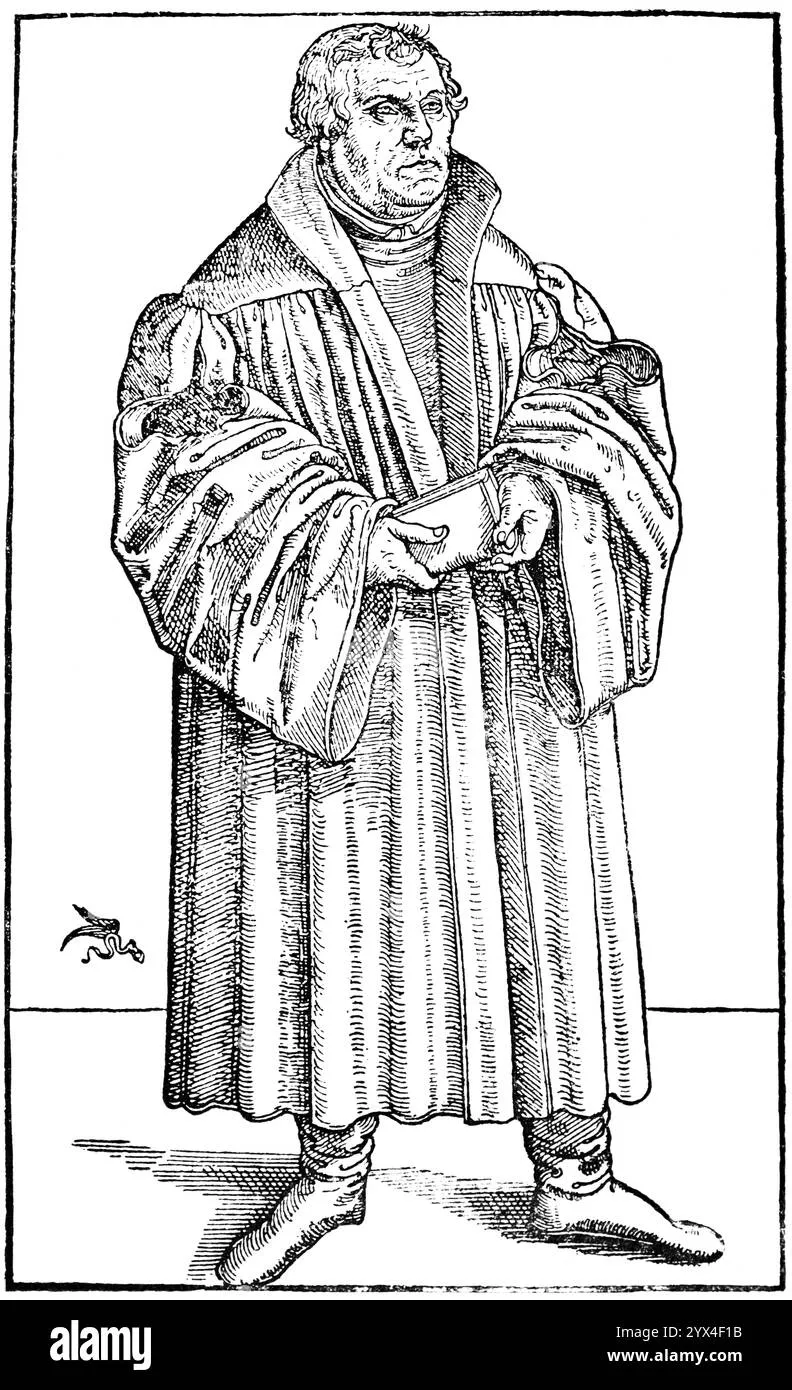 Photo: Martin Luther, via c8.alamy.com
If you're American and this sounds like a description of your family's Thanksgiving dinner circa 2016 to present, that's not a coincidence. It's a pattern. And it's worth understanding who was running it then, because they left fingerprints.
How a Theological Dispute Became an Identity War
Luther's original argument was genuinely about theology. He had serious, substantive objections to how the Catholic Church was handling the sale of indulgences — essentially, the purchase of reduced time in purgatory. This was a legitimate ecclesiastical debate with real stakes.
It did not stay a debate about indulgences for long.
Within a few years, the Reformation had become something much larger and stranger: a full-scale identity conflict in which your position on church governance determined your social circle, your business relationships, your marriage prospects, and in many regions, whether your neighbors would burn your house down. The theological content became almost secondary. What mattered was which team you were on.
The historian Andrew Pettegree, who has studied the Reformation's media ecosystem extensively, found that the most widely circulated pamphlets of the period were not the nuanced theological treatises. They were the ones designed to provoke, humiliate, and mark enemies. Luther himself was a gifted polemicist who understood that outrage traveled faster than argument. His opponents learned the same lesson quickly. The result was an information environment optimized for escalation.
This is a documented feature of human psychology, not a quirk of 16th-century Europeans. When identity becomes attached to a position, the position stops being something you hold and starts being something you are. Changing your mind stops feeling like updating your beliefs and starts feeling like dying. The Reformation's genius — or its tragedy, depending on your perspective — was that it converted theological positions into identity markers faster than any previous movement in Western history.
The Pamphlet Economy and the Engagement Economy
Here's where it gets structurally interesting. The Reformation happened to coincide with the printing press reaching mass adoption across Europe. This was not entirely coincidental — Luther and his contemporaries understood the new medium and used it aggressively — but the technology created dynamics that nobody fully controlled.
Printers were businesses. They printed what sold. What sold was inflammatory content that confirmed what readers already believed and made them furious at the other side. Sound familiar? The printing press created Europe's first attention economy, and the attention economy immediately sorted for outrage over nuance for the same reason Twitter and Facebook did five centuries later: outrage is more engaging, and engagement is the metric that pays.
But printers weren't the only ones profiting. German princes who wanted to break from Rome's financial and political authority found the Reformation extraordinarily convenient. Seizing Catholic Church property — monasteries, cathedrals, vast land holdings — was suddenly reframed not as theft but as righteous reform. The princes who backed Luther were not uniformly motivated by sincere theological conviction. Many of them were motivated by the fact that a successful Reformation meant they got to keep the Church's money.
On the Catholic side, institutions that depended on the existing order — and the revenue streams it generated — backed the Counter-Reformation with equal enthusiasm and equally mixed motives.
Ordinary people were fighting about salvation and identity. Their leaders were frequently fighting about who controlled the treasury.
The Playbook, Beat by Beat
Let's be specific about the tactics, because the specificity is where the historical data gets uncomfortable.
Pamphlet warfare / media ecosystem capture. Both sides in the Reformation invested heavily in controlling the information environment. Content was designed not to persuade the other side but to energize your own. Moderate voices got drowned out because they didn't generate the same emotional response.
Social ostracism as enforcement. In religiously divided communities, doing business with, marrying, or even publicly socializing with the wrong-team people became a mark against your own identity. The social cost of crossing tribal lines was deliberately raised to make defection expensive.
Institutional destruction. Shared institutions — the universal Church, common legal frameworks, interregional trade relationships — were attacked not just because they were corrupt but because shared institutions reduce the power of faction leaders. A population that shares institutions has places to work out disagreements. A population that has destroyed its shared institutions has nowhere to go but deeper into the tribe.
Elite capture of the grievance. Real grievances — corruption in the Church was real, economic exploitation was real — got funneled into identity conflicts that benefited elite actors more than the people doing the fighting. The peasants who died in the German Peasants' War of 1525 were fighting for genuine economic justice. Luther, who had initially expressed some sympathy, ultimately sided with the princes who crushed them. The identity war and the class interests of its leaders turned out to be different things.
You can map each of these onto the current American culture war without straining the analogy. The question the historical record keeps asking is: who benefits from a population sorted into warring identity camps that can't agree on shared institutions?
What Actually Happened After
The Reformation didn't end the corruption it was ostensibly fighting. It fragmented Christendom into competing power structures, each of which developed its own versions of the problems that had plagued the original. It produced roughly 130 years of intermittent religious warfare that killed somewhere between five and eight million Europeans. It generated genuine intellectual and institutional innovation in some areas while causing catastrophic regression in others.
And eventually, exhausted populations on both sides worked out arrangements — the Peace of Westphalia in 1648, and various other settlements — that were essentially agreements to stop letting elites weaponize their identities against each other. Not because the theological differences were resolved. They weren't. But because enough people had noticed the pattern.
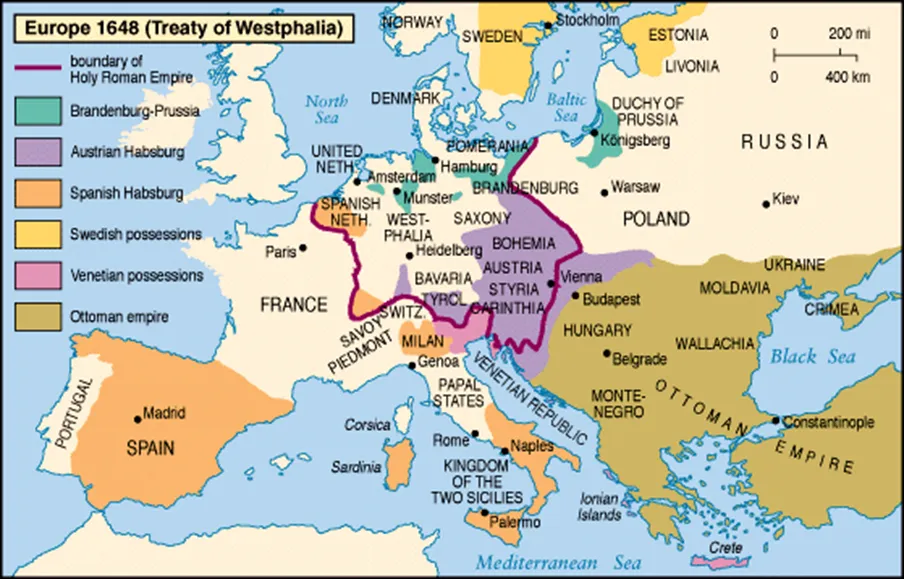 Photo: Peace of Westphalia, via www.timewisetraveller.co.uk
Human psychology hasn't changed since 1517. The outrage engine runs the same way it always has. The pamphlet became the cable segment became the viral tweet, but the mechanism is identical: provoke, sort, escalate, profit. The people doing the provoking are not always the same people doing the dying.
The historical record doesn't tell you which side of the current culture war is right. It does tell you, with considerable consistency, to look carefully at who's selling the ammunition.