The Philanthropy Con Is 2,500 Years Old — And It Still Works Every Single Time

Photo by Photo by Daniel Forsman on Unsplash on Unsplash
Sometime in the second century BCE, a Roman politician named Lucius Aemilius Paullus returned from the conquest of Macedonia with an enormous quantity of looted wealth. He used a portion of it to fund a spectacular public celebration in Rome — games, feasts, spectacle on a scale that left the city talking for years. His reputation, already solid, became something close to legendary. The methods by which he'd accumulated that wealth — military conquest, the enslavement of 150,000 Macedonians, the systematic stripping of a civilization — faded into the background noise of Roman imperial history.
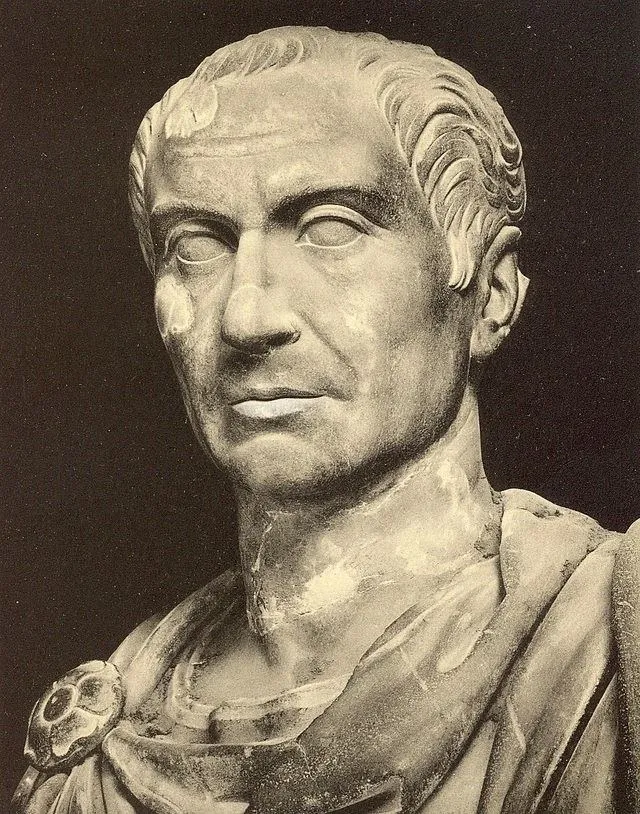 Photo: Lucius Aemilius Paullus, via alchetron.com
Two thousand years later, Andrew Carnegie built 2,509 public libraries using money accumulated through a steel empire that had, among other things, broken unions with private security forces and contributed to the deaths of workers in one of the most violent labor confrontations in American history. Carnegie is remembered today primarily for the libraries.
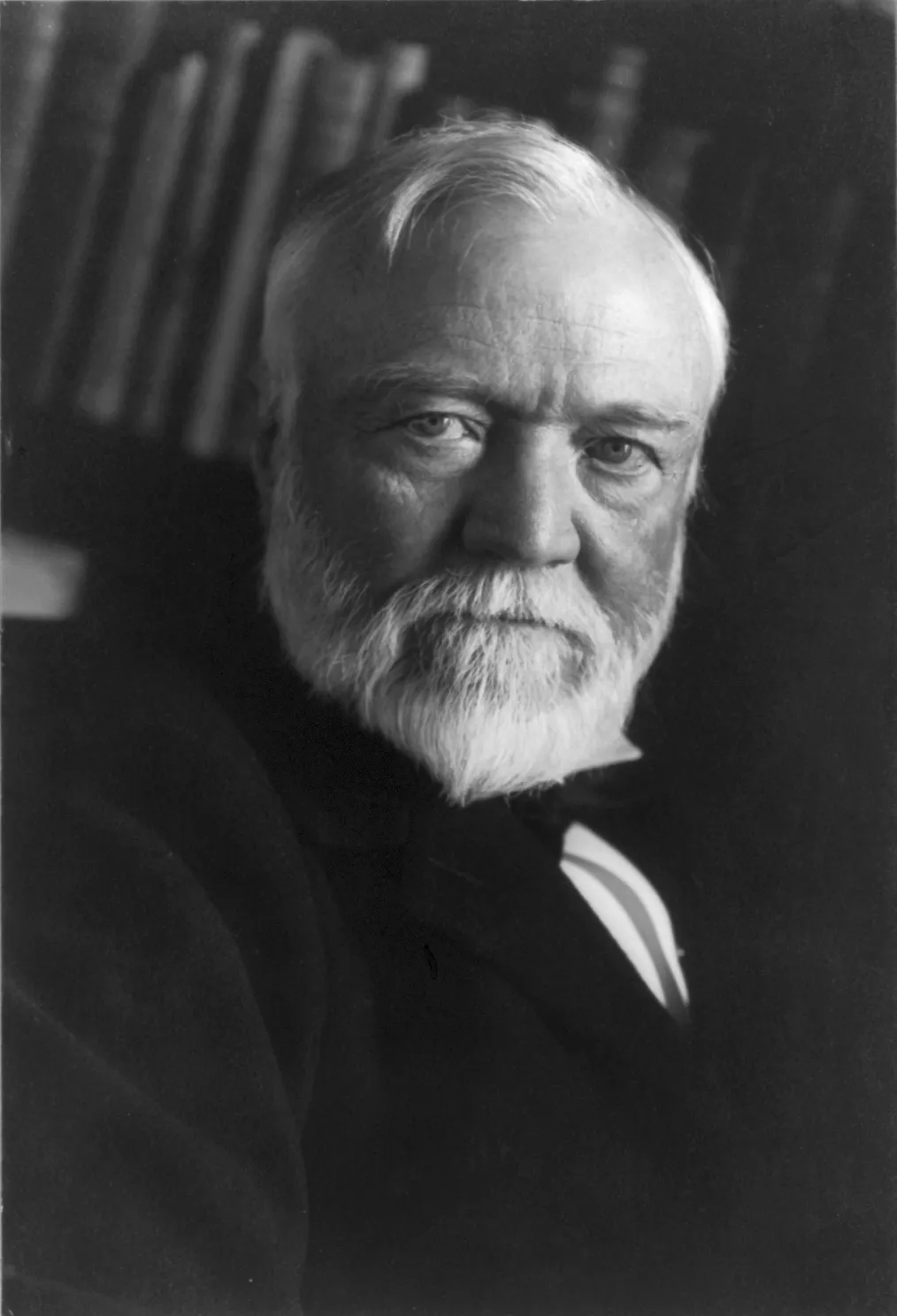 Photo: Andrew Carnegie, via citizendium.org
This is not a coincidence. It is a strategy. And it is at least 2,500 years old.
The Greek Word You Need to Know
The ancient Greeks had a concept called euergetism — from the word euergetes, meaning "benefactor" — that described the social obligation of wealthy citizens to fund public goods. Temples, festivals, grain distributions, athletic competitions: in cities across the Greek world, these were financed not by taxation but by wealthy individuals performing public generosity as a form of social currency.
This sounds admirable until you look at the full picture. The same merchant class that funded the festivals also controlled the grain supply, set interest rates on loans to poorer citizens, and used political connections to structure trade in their favor. The public generosity wasn't separate from the wealth extraction — it was the mechanism that made the wealth extraction socially sustainable. You could tolerate a great deal of economic exploitation from a man who threw you a festival every year and put his name on the new fountain in the agora.
Aristotle noticed this. He wrote about it. He was not entirely impressed. But the system continued for centuries because it was solving a real social problem: concentrated wealth creates resentment, and resentment creates instability, and instability is bad for everyone including the wealthy. Euergetism was the pressure valve. Philanthropy, in every era since, has served the same function.
Rome Industrialized the Formula
Roman aristocrats didn't just practice public generosity — they turned it into a formal competitive sport with explicit social rules. Liberalitas — generosity — was a cardinal virtue of the Roman ruling class, and it was expected to be performed publicly, visibly, and at scale. The gladiatorial games that modern audiences associate with Roman bloodlust were, at their origin, funeral rites funded by wealthy families. They evolved into the primary mechanism by which Roman politicians bought public goodwill.
Julius Caesar, before he had the political power to simply compel loyalty, funded games of such extravagance that they became a political instrument. He wasn't giving people what they needed. He was giving them what they wanted, in a form that made them feel obligated to him. The Latin word for this relationship — clientela — describes a system where wealthy patrons provided benefits to clients in exchange for political support and social deference. It looked like generosity. It functioned like debt.
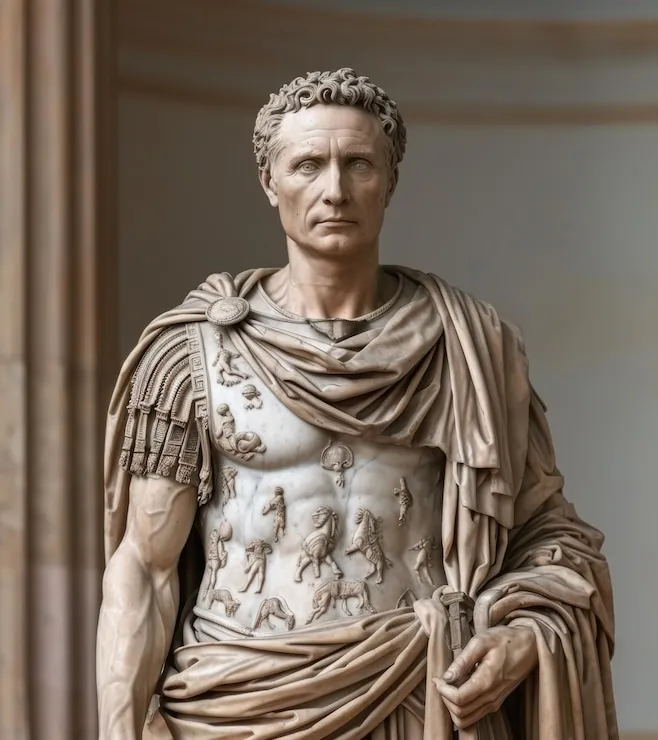 Photo: Julius Caesar, via img.freepik.com
The critical thing to understand is that the Roman population was not fooled by this in any simple sense. They knew perfectly well that the games were a form of political theater. They participated enthusiastically anyway, because the games were genuinely entertaining and the food was genuinely free and the alternative — not getting the games and food — was worse. The psychological mechanism being exploited wasn't gullibility. It was something more fundamental.
What the Brain Actually Wants
Human beings have a deep, cross-cultural, apparently universal expectation that power comes with obligation. Anthropologists and psychologists have documented this in societies across every continent and historical period: concentrated resources and social authority are psychologically tolerable when they come packaged with visible redistribution and demonstrated care for the community. When they don't, the result is instability — which is the historical record too.
This expectation isn't irrational. It's a reasonable inference from the social contract that allowed human groups to function at all. In small-scale societies, the person with the most resources genuinely did have obligations to share — because defection from that norm was visible, consequential, and punishable by social exclusion. The psychology that made that system work got baked into human social cognition. It didn't disappear when societies got bigger and more anonymous.
What philanthropy does — what it has always done — is satisfy that expectation without fulfilling the underlying obligation. Carnegie didn't redistribute his wealth. He performed redistribution in a highly visible, reputationally valuable form while retaining control over how, where, and on what terms the redistribution occurred. His libraries were built where he decided, stocked with what he approved, and named after him. The psychological satisfaction delivered to the public — see, the powerful man is giving back — was real. The actual power transfer was minimal.
The Modern Version Runs the Same Code
Contemporary mega-philanthropy is a remarkably faithful reproduction of the ancient playbook, updated for current aesthetics. The gladiatorial games have been replaced by foundation press releases and TED talks. The grain distributions have become scholarship funds and hospital wings with donor names on them. The clientela system has been replaced by tax structures that allow wealthy donors to direct public-benefit spending while receiving deductions that effectively shift the cost to other taxpayers.
The reputational mechanics are identical. A tech billionaire who has accumulated wealth through market practices that regulators in multiple countries have found anticompetitive can, through sufficiently dramatic philanthropic gesture, substantially rehabilitate their public image. The giving doesn't have to equal the taking. It just has to be visible enough, and targeted at causes emotionally resonant enough, to satisfy the deep psychological expectation that power comes with obligation.
None of this means that individual philanthropic acts don't do real good. Libraries are useful. Vaccines get funded. Diseases get researched. The goods are real. The question the historical record asks is a different one: what is the net effect of a system that allows private wealth to substitute for public obligation, that lets individuals decide what social goods get funded and which don't, and that delivers reputational absolution in exchange for selective generosity?
Aristotle asked that question about euergetism in the fourth century BCE. The answer he came up with — that it was an unstable substitute for actual political equality — didn't change the system. The system was too useful to the people running it.
Twenty-five hundred years of data suggests it still is. And the human brain, wired to feel relieved when the powerful man throws a party, keeps accepting the deal.
Knowing the mechanism doesn't make you immune to it. But it's a start.