Why Your Last Job Interview Had Nothing to Do With Merit — And Everything to Do With Ancient Chinese Theater
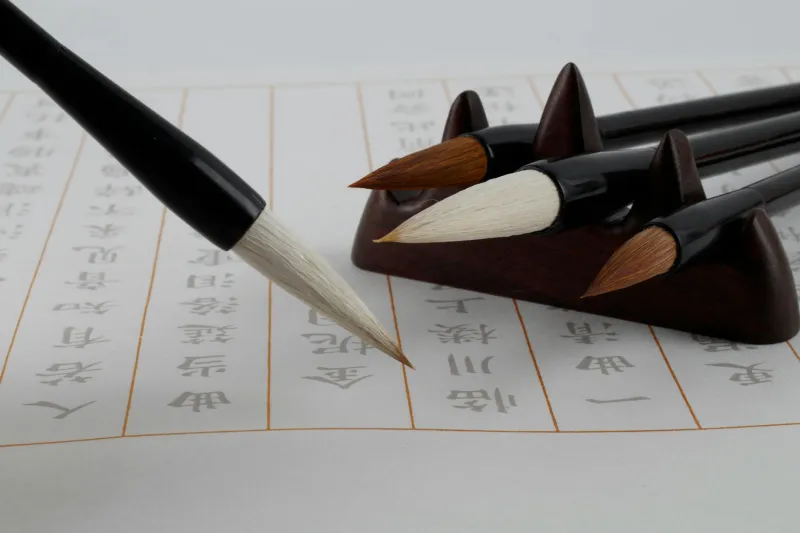
The World's Oldest HR Department
In 165 CE, a young scholar named Liu Zhen walked into what might have been history's most consequential job interview. The Han Dynasty had just perfected something called the xiaolian system — a standardized test for government positions that would make today's Google interviews look like casual coffee chats. Liu had to demonstrate his knowledge of classical texts, compose poetry on demand, and answer hypothetical governance scenarios while a panel of officials scrutinized his every gesture.
 Photo: Han Dynasty, via upload.wikimedia.org
 Photo: Liu Zhen, via www.harvard-yenching.org
Sound familiar? It should. Because every job interview you've ever sat through is just a remix of this 2,000-year-old performance.
When Merit Became Theater
The Han Dynasty didn't invent hiring rituals to find the best candidates. They invented them to create the appearance of finding the best candidates while actually filtering for cultural conformity and social connections. The imperial examinations tested memorization of Confucian classics — not because these texts made someone a better administrator, but because they ensured every government official shared the same cultural references and worldview.
This wasn't a bug in the system. It was the entire point.
Fast-forward to medieval Europe, where guild apprenticeships required elaborate demonstrations of craft skills that had little to do with day-to-day work. A blacksmith's apprentice might spend months perfecting an ornate ceremonial piece that would never be used in regular practice. The ritual wasn't about measuring ability — it was about proving dedication to the guild's traditions and social hierarchy.
The Modern Audition
Today's tech interviews follow the exact same script. When a software engineer spends four hours solving algorithm puzzles on a whiteboard, they're not demonstrating job-relevant skills any more than Liu Zhen's poetry recitation proved he could manage tax collection. They're proving they've internalized the cultural values of the tech industry and can perform under the specific pressures that the hiring committee considers legitimate.
Consider the infamous "culture fit" question that ends most modern interviews. Hiring managers will tell you they're assessing whether someone will work well with the team. But psychological research consistently shows that "culture fit" is code for "reminds me of myself and my friends." It's the same conformity filter that Han Dynasty officials used when they rejected candidates who interpreted Confucian texts in unconventional ways.
The Performance Trap
Here's what makes this pattern so persistent: everyone involved genuinely believes the process works. Ancient Chinese officials convinced themselves that poetry skills correlated with administrative competence. Medieval guild masters insisted that ornate craftsmanship proved general ability. Modern hiring managers swear that whiteboard coding reveals problem-solving talent.
They're all wrong, but they're wrong in exactly the same way.
Psychological studies from the past fifty years have consistently shown that traditional interviews are terrible predictors of job performance. They're slightly better than random chance, but worse than simply looking at past work samples or giving candidates actual job tasks to complete. Yet we keep doing them because the ritual serves a different purpose than stated.
Interviews aren't about finding the best candidate. They're about creating buy-in for hiring decisions through shared performance of evaluation theater.
The Unchanging Script
Every era's hiring ritual follows the same three-act structure:
Act 1: Create artificial scarcity through elaborate application processes that require significant time investment from candidates.
Act 2: Design tests that measure cultural fluency and stress tolerance rather than job-relevant skills, while insisting these tests are purely objective.
Act 3: Make final decisions based on subjective "gut feelings" about candidates who successfully performed the cultural conformity dance.
Roman patricians hiring household managers, Renaissance merchants selecting apprentices, and Silicon Valley startups recruiting engineers all follow this exact script. The costumes change, but the play remains the same.
 Photo: Silicon Valley, via drupal8-prod.visitcalifornia.com
Why We Can't Stop Performing
The interview ritual persists because it solves a real psychological need for both sides. Employers get to feel like they've done their due diligence and made a rational decision. Job seekers get to believe that merit alone determines success, rather than facing the uncomfortable truth that networking, cultural capital, and performance skills often matter more than competence.
This mutual delusion is so powerful that even when organizations try to reform their hiring processes, they usually just create new forms of theater. "Blind" resume reviews still favor candidates who know how to code-switch their language for different audiences. "Structured" interviews still advantage people who are comfortable performing confidence under pressure.
The Uncomfortable Truth
Here's what five thousand years of hiring data actually tells us: the most reliable predictor of job performance is previous performance in similar roles. Everything else is mostly noise wrapped in the comforting fiction of scientific evaluation.
But admitting this would require acknowledging that hiring is fundamentally about social reproduction rather than merit identification. And that's a truth that makes everyone involved too uncomfortable to accept.
So we keep performing the same ancient ritual, convinced that this time we've figured out how to measure talent objectively. Meanwhile, Liu Zhen's ghost is probably laughing at how little we've learned in 2,000 years of job interviews.